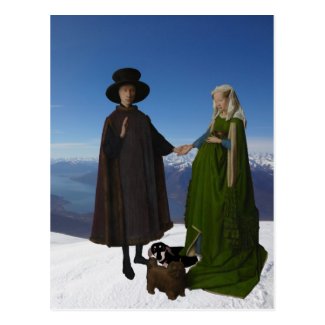
My favorite lakeside walk around Monte Sassalto always brings pleasant surprises. Last week I ran into Dachshund Harlan, who was visiting all the way from Germany.
Harlan works as a research scientist and is pioneering a new application of deep learning to family tree reconstruction by means of butt-sniffing. A quick round of data collection revealed that Harlan and I share a common ancestor who lived in the 1840s.
"His name was Dachshund Piripinko," Harlan said, "and his human was the German painter Carl Friedrich Deiker".
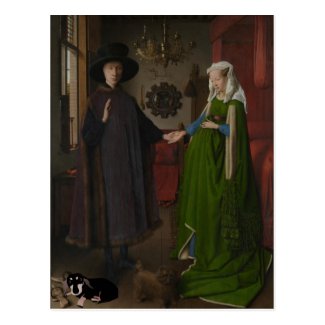
It was Dachshund Piripinko who inspired Herr Deiker to create this famous painting, which reminds me of my recent badger encounter.
Do you think Dachshund Piripinko would be very unimpressed if he knew that his great-great-....-great-granddaughter Tootsie would one day meet a badger and simply stare at him while safely ensconced in Dachshund Daddy's arms? Or would he be proud of my self-control?
Showing posts with label history. Show all posts
Thursday, April 14, 2016
Dachshund Harlan and My Family Tree
Wednesday, April 16, 2014
Lake Orta and How To Extend Your Earthly Existence
I recently traveled on the Lake Orta ferry to the island of San Giulio with a local resident, who was puzzled by Mom's barking bag.
Nestled in the foothills of the Piedmontese Alps of northwestern Italy, Lake Orta is a great destination for the savvy (sausage) traveler.
Back in 1882, Friedrich Nietzsche visited Lake Orta with Lou Andreas-Salomé, with whom he was in love. (Her mom came with them.) 12 years later, she wrote a book about him.
One of Mom's favorite contemporary American authors, Lance Olsen, wrote a book called Nietzsche's Kisses, which focuses on Nietzsche's "last mad night on earth" and touches on their brief love affair.
We spent several hours on the tiny island of San Giulio, home to seventy cloistered nuns.
There are signs for meditative walkies.
San Giulio Island is the setting of Gianni Rodari's delightful novella Lamberto, Lamberto, Lamberto, the story of a billionaire whose lifespan is extended by hiring people to repeat his name over and over and over.
I wonder whether that same trick would work for me. I'm still a puppy at heart, but lately people tend to notice the silver strands on my forehead. Well… why not give it a try?
Please repeat after me: Tootsie, Tootsie, Tootsie, Tootsie, Tootsie, Tootsie, Tootsie, Tootsie, Tootsie...
Nestled in the foothills of the Piedmontese Alps of northwestern Italy, Lake Orta is a great destination for the savvy (sausage) traveler.
Back in 1882, Friedrich Nietzsche visited Lake Orta with Lou Andreas-Salomé, with whom he was in love. (Her mom came with them.) 12 years later, she wrote a book about him.
One of Mom's favorite contemporary American authors, Lance Olsen, wrote a book called Nietzsche's Kisses, which focuses on Nietzsche's "last mad night on earth" and touches on their brief love affair.
We spent several hours on the tiny island of San Giulio, home to seventy cloistered nuns.
There are signs for meditative walkies.
San Giulio Island is the setting of Gianni Rodari's delightful novella Lamberto, Lamberto, Lamberto, the story of a billionaire whose lifespan is extended by hiring people to repeat his name over and over and over.
I wonder whether that same trick would work for me. I'm still a puppy at heart, but lately people tend to notice the silver strands on my forehead. Well… why not give it a try?
Please repeat after me: Tootsie, Tootsie, Tootsie, Tootsie, Tootsie, Tootsie, Tootsie, Tootsie, Tootsie...
Labels:
dog travel,
history,
Italy,
lakes,
literature
Tuesday, February 11, 2014
The Swiss Quota Vote - Part One
You may have read about the Swiss vote to reinstate immigration quotas for European Union nationals.
As a US-born naturalized Swiss citizen and bicontinental resident, I'm uniquely positioned to provide some much needed context.
In spite of their country's central location in the European continent, the Swiss have pretty much managed to stay out of trouble for the past 500 years or so.
In the meantime, their neighbors butchered each other in a series of wars that culminated in the two World Wars. Finally, after over 60 million human beings lost their lives in World War II, European countries decided that trade should replace warfare as the continent's favorite pastime, planting the seeds to the super-national structure that would evolve into the European Union (EU).
While more and more countries joined the EU, the Swiss never felt the need to join. In the 1990s, when they were asked to vote on whether they ought to join, they politely declined.
Yes, they were asked. That's because Switzerland enjoys a unique form of direct democracy that puts the USA and most EU countries to shame. Citizens, not politicians, really do decide.
After saying "no, thank you" to EU membership, the Swiss quickly realized that the idea of a continental-scale common market with no trade barriers was not too shabby. So they negotiated a number of so-called bilateral agreements with the European Union. This way, Switzerland became economically integrated while remaining politically isolated. Who ever said you can't have your cake and eat it, too?
This was the basic context; stay tuned for part two, where we'll tell you more about the vote itself.
As a US-born naturalized Swiss citizen and bicontinental resident, I'm uniquely positioned to provide some much needed context.
In spite of their country's central location in the European continent, the Swiss have pretty much managed to stay out of trouble for the past 500 years or so.
In the meantime, their neighbors butchered each other in a series of wars that culminated in the two World Wars. Finally, after over 60 million human beings lost their lives in World War II, European countries decided that trade should replace warfare as the continent's favorite pastime, planting the seeds to the super-national structure that would evolve into the European Union (EU).
While more and more countries joined the EU, the Swiss never felt the need to join. In the 1990s, when they were asked to vote on whether they ought to join, they politely declined.
Yes, they were asked. That's because Switzerland enjoys a unique form of direct democracy that puts the USA and most EU countries to shame. Citizens, not politicians, really do decide.
After saying "no, thank you" to EU membership, the Swiss quickly realized that the idea of a continental-scale common market with no trade barriers was not too shabby. So they negotiated a number of so-called bilateral agreements with the European Union. This way, Switzerland became economically integrated while remaining politically isolated. Who ever said you can't have your cake and eat it, too?
This was the basic context; stay tuned for part two, where we'll tell you more about the vote itself.
Monday, January 27, 2014
The Arnolfinis love to hike
Painted in 1434 in Bruges, Belgium, "The Arnolfini Couple" is one of the most popular paintings at London's National Gallery. If you listen to the BBC, you may have heard that Dachshund Daddy recently discovered this previously unknown version of "The Arnolfini Couple", which features my great-great-...-grandfather Zibibbo next to his fur-brother Baruffo.
Baruffo was a fluffy Brussels Griffon. According to the Daily Mail, Brussels Griffons are the descendants of a long line of Flanders Terriers bred to hunt rats.
My doggy family records confirm that Dachshund Zibibbo lived with Baruffo and the Arnolfinis in Lucca, Italy in the 1420s. Later, in the 1430s, they traveled to Bruges, Belgium, where Jan Van Eyck created their iconic portrait(s).
On their way from Italy to Belgium, the Arnolfinis and their doggies came through Switzerland and took a day off to hike to the top of Monte Lema, where the following photo was taken with Dachshund Zibibbo's digital camera.
Jean-Baptiste Lamarck would have posited that I owe my mouse-hunting skills to the training that Dachshund Zibibbo received from Baruffo the Brussels Griffon. Unfortunately, as my godson Bouncing Bertie would confirm, Mendel has already shown that acquired traits cannot be inherited. Too bad.
Before I fur-get... you can find the Arnolfinis, Baruffo, and Dachshund Zibibbo in Tootsie's Shoppe as part of my wotten waven "Dachshunds in Art" collection.
Baruffo was a fluffy Brussels Griffon. According to the Daily Mail, Brussels Griffons are the descendants of a long line of Flanders Terriers bred to hunt rats.
My doggy family records confirm that Dachshund Zibibbo lived with Baruffo and the Arnolfinis in Lucca, Italy in the 1420s. Later, in the 1430s, they traveled to Bruges, Belgium, where Jan Van Eyck created their iconic portrait(s).
On their way from Italy to Belgium, the Arnolfinis and their doggies came through Switzerland and took a day off to hike to the top of Monte Lema, where the following photo was taken with Dachshund Zibibbo's digital camera.
Jean-Baptiste Lamarck would have posited that I owe my mouse-hunting skills to the training that Dachshund Zibibbo received from Baruffo the Brussels Griffon. Unfortunately, as my godson Bouncing Bertie would confirm, Mendel has already shown that acquired traits cannot be inherited. Too bad.
Before I fur-get... you can find the Arnolfinis, Baruffo, and Dachshund Zibibbo in Tootsie's Shoppe as part of my wotten waven "Dachshunds in Art" collection.
Labels:
art,
dog humor,
history,
Switzerland,
Tootsie's Shoppe
Sunday, January 26, 2014
Wednesday, December 18, 2013
Sweet Molossus and Hotel California
Can dogs visit the British Museum? Not really, unless you're lucky enough to be a guide dog or an assistance dog, in which case you should be aware that dog bowls are available. If you're not a guide dog or an assistance dog, you can still visit the British Museum if you're a Molossus hound.
Now take a look at me:
Do you think I might pass for a Molossus hound and visit the museum? I think I might. But what if they think I'm the real thing and never let me leave? Kind of like the Hotel California?
P.S. Thank you, Dachshund Daddy, for finding the time to engage both in cultural and canine activities during your recent work trip to London.
Now take a look at me:
Do you think I might pass for a Molossus hound and visit the museum? I think I might. But what if they think I'm the real thing and never let me leave? Kind of like the Hotel California?
P.S. Thank you, Dachshund Daddy, for finding the time to engage both in cultural and canine activities during your recent work trip to London.
Thursday, April 25, 2013
Il Venticinque Aprile
Today, our neighboring country of Italy enjoys a national holiday to commemorate the end of the Nazi occupation at the end of World War II.
This graffiti at an abandoned checkpoint on the Swiss-Italian border
commemorates all those who lost their lives in WWII.
In southern Switzerland, the 25th of April is notorious for terrible traffic, because all the wealthy Italians who have stashed worldly possessions, including gold, in Switzerland come here to check on it. It's amazing how neighboring countries relate to the same day in different ways.
"Honor to those who fell for their country
25 April forever."
[Anyone know what the symbol means?
We're concerned the symbol may have negative overtones.]
In southern Switzerland, the 25th of April is notorious for terrible traffic, because all the wealthy Italians who have stashed worldly possessions, including gold, in Switzerland come here to check on it. It's amazing how neighboring countries relate to the same day in different ways.
Friday, April 12, 2013
More on Île Sainte-Marguerite
Here are Mom and I on the north coast of Sainte-Marguerite, looking across at the stretch of coastline between Cannes and Antibes. It seems like they've managed to develop every single square inch.

Luckily, Sainte-Marguerite has been spared by the uncontrolled urban sprawl that plagues the mainland.

Little sausages like me can come here, enjoy the wind, and not worry about cars.

I could taste the salt in the wind - yummy!

We also stopped by the Fort where the Man in the Iron Mask was held prisoner. His identity was never discovered, but Alexandre Dumas posited he was Louis XIV's twin brother.

At the end of our visit, I retreated to my quarters.

My travel bag is my safe zone, and I never need to be coaxed to waddle into it.

Here I am inside my bag on board the ferry back to Cannes. The green blob next to me is my mom.

Follow-up:
Dear Lovable Lily,
Thank you for your questions from our previous post on Sainte-Marguerite!
The ferry ride takes about fifteen minutes. That's it! Each ticket costs about fifteen dollars (US) round trip, but I got on for free.
I'm not sure if the monks do something more than pray. I must ask parents to take me back and to take me to the monk's island to find out.
Keep on wagging, love,
Tootsie

Luckily, Sainte-Marguerite has been spared by the uncontrolled urban sprawl that plagues the mainland.

Little sausages like me can come here, enjoy the wind, and not worry about cars.

I could taste the salt in the wind - yummy!

We also stopped by the Fort where the Man in the Iron Mask was held prisoner. His identity was never discovered, but Alexandre Dumas posited he was Louis XIV's twin brother.

At the end of our visit, I retreated to my quarters.

My travel bag is my safe zone, and I never need to be coaxed to waddle into it.

Here I am inside my bag on board the ferry back to Cannes. The green blob next to me is my mom.

Follow-up:
Dear Lovable Lily,
Thank you for your questions from our previous post on Sainte-Marguerite!
The ferry ride takes about fifteen minutes. That's it! Each ticket costs about fifteen dollars (US) round trip, but I got on for free.
I'm not sure if the monks do something more than pray. I must ask parents to take me back and to take me to the monk's island to find out.
Keep on wagging, love,
Tootsie
Labels:
dog hiking,
dog travel,
France,
friends,
history,
islands,
literature,
sea
Saturday, March 2, 2013
William Tell and Rossini
Inspired by yesterday's post about William Tell's Chapel, Grandpa wrote a new limerick:
Since long ago when I was weenie
I confused William Tell with Rossini
I felt sweet, swinging bliss
When I learned he was Swiss
And his dogs were all fans of Puccini.

Did you notice that the dog in the fresco is steering the boat?
I confused William Tell with Rossini
I felt sweet, swinging bliss
When I learned he was Swiss
And his dogs were all fans of Puccini.

Did you notice that the dog in the fresco is steering the boat?
Labels:
history,
literature,
poetry,
Switzerland
Friday, March 1, 2013
Did William Tell rescue dogs?
On the shores of Lake Lucerne, just south of the village of Sisikon, lies a chapel dedicated to William Tell, Switzerland's quintessential folk hero.

The Chapel marks the spot where William Tell jumped off the boat of his captors as it was getting ravaged by a storm, as shown in one of the four frescos by the Swiss painter Ernst Stückelberg that are inside the Chapel.

I hope William also rescued the dog on the boat.

William's captors worked for Gessler, the Austrian overlord who had forced William Tell to hit an apple placed on the head of his own son with a single shot. After William's success, Gessler noticed a second arrow in William's hand. "You were supposed to hit the apple with a single arrow. Why did you need two arrows?", Gessler asked. "If I had killed my son, you would have been next", was William's honest reply.

Gessler got very upset, visibly riling up his dog.

Enraged by William's words, Gessler had him arrested and ordered his men to take him to his castle across the lake. As a massive storm broke out, the crew freaked out and unchained William so he could steer the boat to safety. That's how William managed to jump off the boat and, I hope, save the dog.

Note that the dog on the boat is different from the dog in the apple-shot scene.
Dachshund Daddy's travel note: the Tellskapelle, or Tell's Chapel, can be reached with a quick scamper from the Axenstrasse between Sisikon and Flüelen. You'll most likely use the Axenstrasse if you ever drive across Switzerland north to south. A much better way to visit the Chapel is to use the lakeside trail from the village of Sisikon. You can also take a ferry from Flüelen or Lucerne to the landing dock right by the Chapel...but check the weather forecast first and be sure no storms are expected.

The Chapel marks the spot where William Tell jumped off the boat of his captors as it was getting ravaged by a storm, as shown in one of the four frescos by the Swiss painter Ernst Stückelberg that are inside the Chapel.

I hope William also rescued the dog on the boat.

William's captors worked for Gessler, the Austrian overlord who had forced William Tell to hit an apple placed on the head of his own son with a single shot. After William's success, Gessler noticed a second arrow in William's hand. "You were supposed to hit the apple with a single arrow. Why did you need two arrows?", Gessler asked. "If I had killed my son, you would have been next", was William's honest reply.

Gessler got very upset, visibly riling up his dog.

Enraged by William's words, Gessler had him arrested and ordered his men to take him to his castle across the lake. As a massive storm broke out, the crew freaked out and unchained William so he could steer the boat to safety. That's how William managed to jump off the boat and, I hope, save the dog.

Note that the dog on the boat is different from the dog in the apple-shot scene.
Dachshund Daddy's travel note: the Tellskapelle, or Tell's Chapel, can be reached with a quick scamper from the Axenstrasse between Sisikon and Flüelen. You'll most likely use the Axenstrasse if you ever drive across Switzerland north to south. A much better way to visit the Chapel is to use the lakeside trail from the village of Sisikon. You can also take a ferry from Flüelen or Lucerne to the landing dock right by the Chapel...but check the weather forecast first and be sure no storms are expected.
Thursday, January 31, 2013
Burrowing into History - Part Two
Here we are again on the rampart walk, where one can literally burrow into history...
and explore it inside out.
History is precious and treasures do come out of its vault.
We were lucky enough to run into Professor Caneaggiro, an Italian historian who gave us lots of information about the Cadorna Line.
Among other things, I learned that the Cadorna Line never saw any military action: no foreign power ever violated the neutrality of Switzerland to invade Italy.
and explore it inside out.
History is precious and treasures do come out of its vault.
We were lucky enough to run into Professor Caneaggiro, an Italian historian who gave us lots of information about the Cadorna Line.
Among other things, I learned that the Cadorna Line never saw any military action: no foreign power ever violated the neutrality of Switzerland to invade Italy.
Labels:
dog hiking,
history,
Italy,
mountains,
Switzerland
Tuesday, January 29, 2013
Burrowing into History - Part One
Before the onset of World World One, the Italians harbored fears of a foreign invasion through Switzerland..
and invested a huge amount of money in building the Cadorna Line, a large-scale system of ramparts, tunnels, and fortifications in the mountains along the Swiss border. One of such mountains is Poncione d'Arzo, which we visited in one of our recent hikes.
Unbeknownst to most, there exists a very well preserved portion of the Cadorna Line linking the top of Poncione d'Arzo to nearby Monte Orsa.
Since I'm both a history buff and a burrowing dachshund, I saw endless possibilities for enrichment.
The whole place is basically one big burrow.
Would you like to continue burrowing into history with me?
and invested a huge amount of money in building the Cadorna Line, a large-scale system of ramparts, tunnels, and fortifications in the mountains along the Swiss border. One of such mountains is Poncione d'Arzo, which we visited in one of our recent hikes.
Unbeknownst to most, there exists a very well preserved portion of the Cadorna Line linking the top of Poncione d'Arzo to nearby Monte Orsa.
Since I'm both a history buff and a burrowing dachshund, I saw endless possibilities for enrichment.
The whole place is basically one big burrow.
Would you like to continue burrowing into history with me?
Labels:
dog hiking,
history,
Italy,
mountains,
Switzerland
Subscribe to:
Posts (Atom)